
Lokhorstkerk
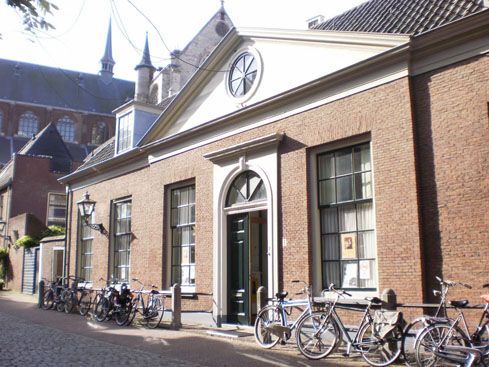
The Lokhorstkerk is a typical Mennonite clandestine church dating from 1638, located a stone's throw from the medieval Pieterskerk in the heart of Leiden.
A jewel in the church hall is the monumental Mitterreither/Van Dam organ from 1774/1807 with Rococo wood carvings on the organ front and balcony.
Every Sunday morning there is a church service, organized since 1971 by the Leiden partnership of Mennonites and Remonstrants, each with their own minister. In addition, the Lokhorst Church is the center of numerous cultural activities, even during the week.
In the Middle Ages, the church grounds were part of a count's estate with a house where Floris V, among others, was born. Later, throughout the 16th century, this property came into the private hands of the van Lockhorst family.
After the demolition of the house and the parcelling of the land, the Waterland Mennonite Congregation purchased several plots, including in 1613 and 1638, after which the construction of the church hall began.
With the…
A jewel in the church hall is the monumental Mitterreither/Van Dam organ from 1774/1807 with Rococo wood carvings on the organ front and balcony.
Every Sunday morning there is a church service, organized since 1971 by the Leiden partnership of Mennonites and Remonstrants, each with their own minister. In addition, the Lokhorst Church is the center of numerous cultural activities, even during the week.
In the Middle Ages, the church grounds were part of a count's estate with a house where Floris V, among others, was born. Later, throughout the 16th century, this property came into the private hands of the van Lockhorst family.
After the demolition of the house and the parcelling of the land, the Waterland Mennonite Congregation purchased several plots, including in 1613 and 1638, after which the construction of the church hall began.
With the addition in 1648 of the section that is now behind the white pillars, the church hall reached its current size. The church served as a clandestine church until 1795. We know that it was customary to place the women's seats in the middle and the men's seats around them for safety reasons.
The covering of the passageway between the church space and the current church council room and the Vermeer Room was only added later. Originally, there was a dead-end alley between the church and the former sexton's house. The medieval cellar of the Lockhorst House used to serve as the church's cloakroom.
Openingtimes
- Every monday open
- Every tuesday open
- Every wednesday open
- Every thursday open
- Every friday open
- Every saturday open
- Every sunday open